By
Manta Bay snorkeling is a boat trip off the south-west coast of Nusa Penida where you float at the surface while wild reef manta rays feed and glide below you. You do not need to dive or even swim well, because we provide life jackets, gear and a local boat guide. Sightings are likely on most days, but nobody can promise them.
Quick facts
- Where: Manta Bay, off the south-west cliffs of Nusa Penida, reached by local boat
- What you see: reef manta rays, gentle plankton feeders with no stinging barb
- Our snorkel stops: Manta Bay, Crystal Bay, Gamat Bay and Wall Bay
- Swimming skills: not required, since life jackets and snorkel gear come with the tour
- Package: West + Snorkeling, from IDR 700,000 per person (Sanur Port) or IDR 850,000 with hotel pickup
- Golden rule: never touch a manta and keep a respectful distance
What is Manta Bay snorkeling like?
In short, Manta Bay snorkeling is a few minutes of rocking boat, then a calm float above some of the largest fish in the ocean. Our boat guide watches the water, spots the dark shapes, and then tells you when to slip in.
Manta Bay sits below tall limestone cliffs, so the setting alone is dramatic. The water here faces the open ocean. As a result, there is often a swell, and the sea can feel cooler than at Bali’s beaches. Most guests forget all of that the moment a manta glides past with its mouth wide open.
Visibility changes from day to day. On a clear morning you can see a manta from several metres away. On a plankton-rich day the water looks greener, but that is often when the mantas feed near the surface. In other words, murky water is not always bad news for Manta Bay snorkeling.
What are manta rays?
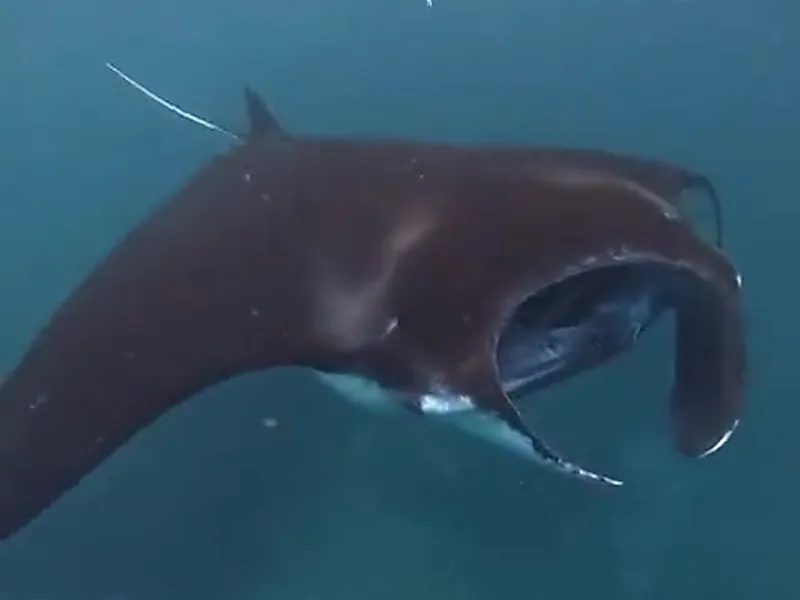
Manta rays are large, flat cousins of sharks that eat tiny plankton. The ones you meet around Nusa Penida are reef manta rays, a species that stays close to coasts and islands.
Reef mantas commonly reach around three metres from wingtip to wingtip, and big adults can grow larger. Despite their size, they are harmless to people. Unlike stingrays, they have no stinging spine on the tail. They also have no teeth for biting. Instead, they swim with their mouths open and filter plankton from the water.
Mantas also visit “cleaning stations” on the reef. There, small fish pick parasites and dead skin off their bodies. That is why the same area can attract mantas again and again. Indonesia gave manta rays national protection in 2014, so every visit should leave them undisturbed.
Will you definitely see manta rays?
No one can promise a sighting on a Manta Bay snorkeling trip, because mantas are wild animals that come and go as they please. On most days our boat guides find them, but some days they stay deep or move elsewhere.
Sea conditions matter too. If the swell at Manta Bay is too big, the boat guide may decide it is not safe to stop there. In that case, you still snorkel the other three spots. We would rather skip one stop than put you in rough water.
The four snorkel spots on our tour
Our West + Snorkeling package covers four spots, each with a different feel. The boat guide picks the order on the day, based on tides and swell.
| Spot | Main highlight | Typical conditions |
|---|---|---|
| Manta Bay | Reef manta rays feeding near the surface | Open water, often some swell |
| Crystal Bay | Coral garden and plenty of reef fish | Clear water, currents can pick up further out |
| Gamat Bay | Healthy coral close to the surface | Usually gentler, good for first-timers |
| Wall Bay | A coral wall that drops into the blue | Drift-style float along the reef |
Manta Bay: where the mantas feed
This is the headline stop. During Manta Bay snorkeling you stay at the surface and watch the mantas below, so there is no need to dive down. Some guests stay in for the whole stop, while others climb back aboard after a few passes.
Crystal Bay: coral and colourful fish
Crystal Bay is a white-sand beach on the west coast with a small rocky islet offshore. The reef here has lots of fish, such as parrotfish and butterflyfish. Then, after your snorkel, you can see the bay from the boat with its palm-lined beach behind you.
Gamat Bay: calm reef for beginners
Gamat Bay often feels like the easiest stop of the day. The coral sits close to the surface and the water tends to be calmer. For this reason, it is a good place to get used to the mask before or after the mantas.
Wall Bay: a drop-off of coral
At Wall Bay the reef falls away along a steep wall of coral. You float along the top edge and look down into deeper blue water. It is especially good for spotting schools of small fish around the coral.
Is Manta Bay snorkeling OK for beginners and non-swimmers?
Yes. You can join without any swimming experience, because you wear a life jacket the whole time and a local boat guide stays with the group.
Many of our guests try Manta Bay snorkeling as their very first snorkel. The boat guide shows you how to fit the mask, breathe through the snorkel and float face-down. If you feel nervous, you can hold a ring buoy or the guide’s arm. You can also stay on the boat at any stop and simply watch.
That said, Manta Bay is open ocean, not a swimming pool. Waves and current can make the water feel lively. So tell us before the trip if you have any medical conditions, a fear of deep water, or young children in your group. We then plan the day around you, which is one of the big benefits of a private tour.
Want the mantas and the famous viewpoints in one day? Our West + Snorkeling private tour combines all four snorkel spots with Kelingking Beach and Broken Beach. It includes the fast boat, snorkel boat, gear, life jackets, lunch and your own driver-guide.
How to swim with manta rays responsibly
The short version for Manta Bay snorkeling: look, do not touch, and give the mantas space. Mantas have a protective mucus layer on their skin, and touching can damage it.
We follow the swimmer guidelines from the Manta Trust, a charity that studies and protects mantas. In practice, that means:
- Keep a distance of at least three metres, and more around the tail.
- Never touch, chase or try to ride a manta.
- Stay at the surface rather than diving down on top of one.
- Let the manta come to you, and leave its path clear.
- Switch off camera flash and avoid splashing with your fins.
- Also skip sunscreen that may harm coral, and apply any cream well before you get in.
Calm behaviour pays off. When swimmers stay still, mantas often relax and pass closer of their own accord. On the other hand, a crowd kicking towards them usually sends them deeper. Our boat guides will remind the group, but it helps to know the rules before you jump in.
Safety, seasickness and what to bring
Good preparation makes a Manta Bay snorkeling day far more comfortable. Most problems come from the boat ride or the sun, not from the mantas.
Listen to the boat guide at every stop. They read the current and will tell you where to swim and when to come back. If the sea is too rough, they may change the order or skip a spot. Finally, always keep your life jacket on, even if you are a strong swimmer.
How to avoid seasickness on the boat
Both the Sanur to Nusa Penida fast boat and the snorkel boat can roll in a swell. If you get motion sickness, take a tablet before you board, following the instructions on the pack.
- Eat a light breakfast, not a heavy or greasy one.
- Sit near the back of the boat, where the motion is usually gentler.
- Keep your eyes on the horizon instead of your phone.
- Get fresh air and sip water in small amounts.
Interestingly, many people feel better once they are in the water. Floating face-down with a snorkel removes the rocking motion of the boat. Still, if you feel unwell, tell the guide early so they can help.
What to pack for Manta Bay snorkeling
We provide the mask, snorkel, fins and life jacket, so you only need personal items. Bring these in a small bag:
- Swimwear worn under your clothes, plus a towel
- A rash guard or long-sleeve swim top for sun and cool water
- Reef-friendly sunscreen, a hat and sunglasses
- A dry bag for your phone and cash
- Seasickness tablets if you need them
- Dry clothes and sandals for the viewpoints later
A waterproof phone case or action camera is great for photos. Even so, keep the strap around your wrist, because the current can take anything you drop.
Manta Bay snorkeling FAQ
How deep is the water for Manta Bay snorkeling?
The water at Manta Bay is deep enough that you cannot stand, so you float at the surface the whole time. The mantas usually swim a few metres below you, and sometimes higher. Because you wear a life jacket, depth does not matter much. You simply look down through your mask and watch.
Can children join a snorkeling trip to see manta rays?
Yes, children often join Manta Bay snorkeling, as long as they are comfortable in the water with a life jacket and mask. Still, the sea at Manta Bay can be choppy, so very young kids may prefer to watch from the boat. Tell us their ages when you book, and we will advise what suits your family.
What is the best time of year for Manta Bay snorkeling?
Mantas live around Nusa Penida all year, so you can snorkel in any month. However, the dry season usually brings clearer skies, while some months bring bigger swell or cooler water. Calm seas matter more than the calendar. Read our guide on when to visit for the full seasonal picture.
Do I need my own snorkel gear?
No. Our Manta Bay snorkeling package includes a mask, snorkel, fins and a life jacket for every guest. Some people still bring their own mask for a perfect fit, especially if they wear prescription lenses. If you do, give it to the boat guide when you board so it stays safe between stops.
Plan your Manta Bay snorkeling day
If you want Manta Bay snorkeling, coral and the island’s best-known viewpoints in a single trip, the West + Snorkeling package is the right fit. For the bigger picture, read our Nusa Penida travel guide, see how a one-day Nusa Penida itinerary flows, and check when to visit Nusa Penida for the calmest seas. When you are ready, message Buncis Ketut and the team on WhatsApp with your date and group size.